
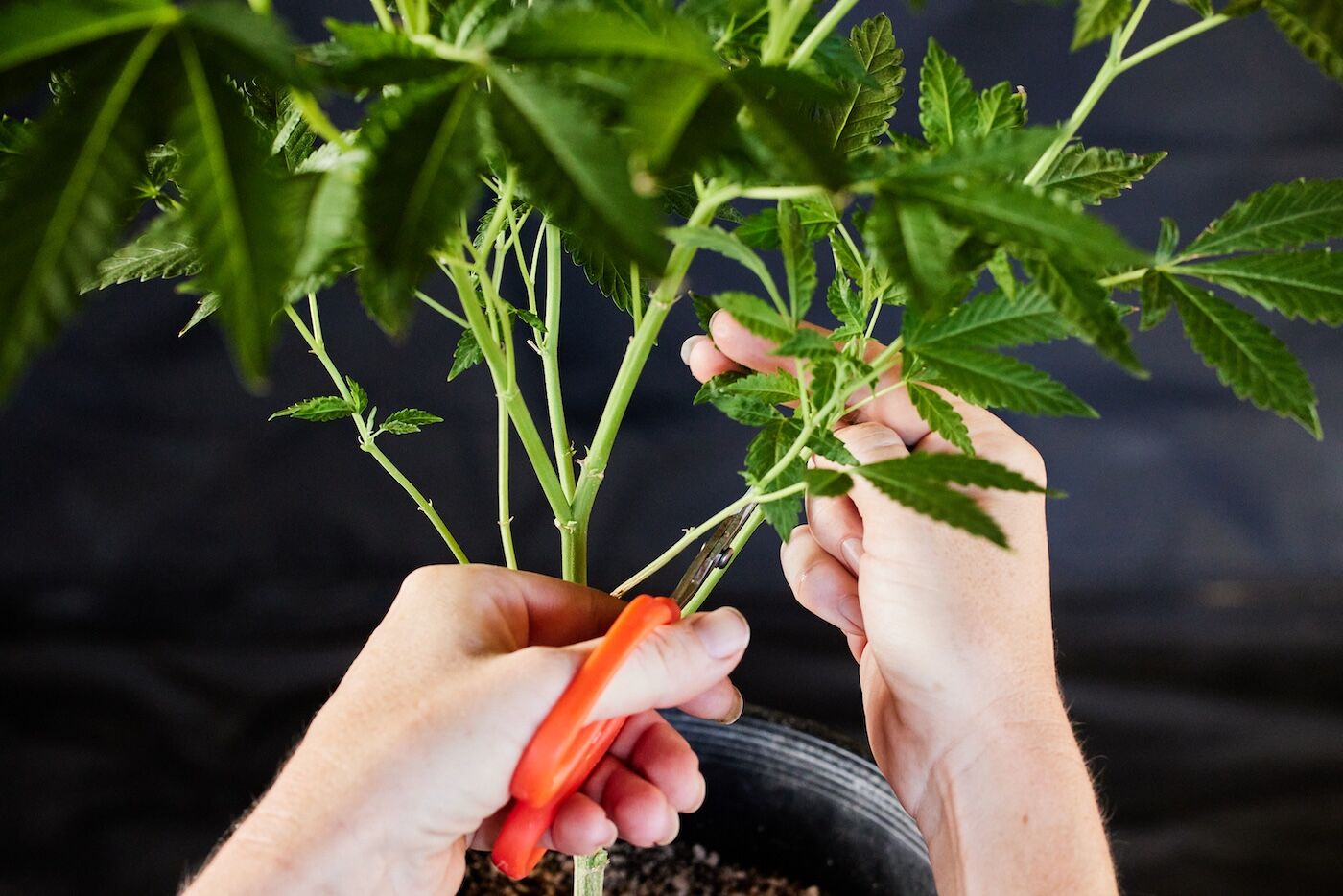
High-quality cannabis cultivation requires more than just nutrient management and light cycles; it demands active structural intervention. Understanding how to prune cannabis plants for higher yields is a fundamental skill for any serious cultivator aiming to maximize the metabolic potential of their garden. Pruning involves the strategic removal of specific foliage to redirect the plant‘s energy from redundant growth to the development of robust, resinous flowers. By eliminating lower branches that receive insufficient light, growers can mitigate the risk of mold while encouraging the plant to focus its auxins—growth hormones—on the upper canopy. This process not only improves the overall health of the plant by increasing airflow and reducing transpiration stress but also ensures that every watt of light energy is utilized efficiently. Mastery of these techniques allows for a more uniform canopy, preventing the development of underdeveloped “popcorn” buds and significantly increasing the final harvest weight. Consistent application of these methods, tailored to the specific morphology of the cultivar, is essential for professional-grade results in both indoor and outdoor environments.
How to Prune Cannabis Plants for Higher Yields
The Physiological Impact of How to Prune Cannabis Plants for Higher Yields
To appreciate the necessity of pruning, one must understand the concept of apical dominance. Cannabis plants naturally grow in a coniferous shape, prioritizing the central main stem to reach the sun. This evolutionary trait, while beneficial in the wild for competing with surrounding vegetation, is inefficient in a controlled environment where light sources are fixed. When a cultivator prunes the plant, they disrupt this dominance, encouraging the redistribution of auxins and cytokinins to lateral branches. This hormonal shift creates a flat, even canopy where multiple “main” colas can thrive simultaneously.
Core Pruning Techniques for Canopy Management
There are several high-stress and low-stress methods utilized to alter the plant’s natural architecture. The most common include topping, fimming, and lollipopping. Each serves a specific purpose in maximizing photosynthetic efficiency and ensuring that nutrients are delivered to the most productive areas of the plant.
Topping vs. Fimming: A Comparative Analysis
Topping involves the complete removal of the growing tip above a node, resulting in two new main branches. Fimming, an acronym for “F*** I Missed,” involves removing approximately 75% of the new growth, which often results in four or more new shoots. While topping is more surgical and provides better structure for heavy branches, fimming is less stressful and can create a denser canopy in a shorter timeframe.
| Feature | Topping | Fimming |
|---|---|---|
| Primary Goal | Creates two main colas | Creates four or more colas |
| Stress Level | High | Moderate |
| Recovery Time | 3–7 Days | 2–4 Days |
| Best For | Vertical height control | Maximizing density in small spaces |
Timing and Recovery: The Cultivator’s Schedule
Pruning must be executed during the vegetative stage to allow the plant sufficient time to recover before the energy-intensive flowering phase begins. Attempting major structural pruning during flowering can lead to hermaphroditism or stunted growth, as the plant’s metabolic focus shifts from tissue repair to floral production. Lollipopping, the removal of the bottom third of the plant’s growth, should generally be completed just before the transition to a 12/12 light cycle or during the first two weeks of the “stretch” period.
| Growth Stage | Pruning Action | Benefit |
|---|---|---|
| Early Vegetative | Topping/Fimming | Breaking apical dominance |
| Mid-Late Vegetative | Inner Branch Thinning | Improved airflow/Reduced humidity |
| Pre-Flowering | Lollipopping | Redirecting energy to top colas |
| Weeks 1-3 Flowering | Light Defoliation | Light penetration to lower nodes |
Common Pitfalls in Plant Manipulation
Over-pruning is the most frequent error made by novice growers. Removing more than 20-30% of the total foliage at once can send the plant into a state of shock, causing it to cease nutrient uptake. This stagnation negates the benefits of pruning by extending the total cultivation time. Furthermore, using unsterilized tools can introduce pathogens like Botrytis or Fusarium directly into the plant’s vascular system. Always ensure that pruning shears are sharpened and cleaned with isopropyl alcohol between plants to maintain a sterile environment.
Key Takeaways:
- Pruning redirects growth hormones from the main stalk to lateral branches for a more uniform canopy.
- Lollipopping ensures that energy is not wasted on “popcorn” buds that receive little light.
- Only prune during the vegetative stage or early flowering to avoid stressing the reproductive cycle.
- Always use sterilized tools to prevent the spread of disease and systemic infections.
Is it possible to prune plants during the flowering stage?
While heavy structural pruning should be avoided during flowering, light defoliation is often necessary. Removing fan leaves that shade significant bud sites during the first three weeks of bloom can improve light penetration and air circulation. However, any pruning after the third week of flowering is generally discouraged as it can impede final resin production.
How long should I wait between pruning sessions?
The plant typically requires 3 to 7 days to fully recover from high-stress pruning. You should observe new, vigorous growth before performing additional cuts. If the plant looks wilted or growth has stalled, delay further intervention until the specimen shows signs of metabolic recovery.
Does every strain react the same to pruning?
No, different cultivars have varying tolerances. Indica-dominant strains tend to be more compact and may require more thinning to prevent mold, whereas Sativa-dominant strains often have longer internodal spacing and may require topping to manage their aggressive vertical growth. Always research your specific genetics before applying aggressive techniques.
About the Author



I’d like to thank you for the efforts you’ve put in writing this blog. I really hope to see the same high-grade content from you later on as well.
In truth, your creative writing abilities has encouraged me to get my own, personal site now 😉
I know this site presents quality depending articles or reviews and other information, is there any other site which provides these kinds of data in quality?
Its like you read my mind! You appear to know so much about this, like you wrote the book in it or something. I think that you could do with some pics
to drive the message home a little bit, but instead of that, this is wonderful blog. A fantastic read. I will definitely be back.
I got this web site from my friend who told me concerning this website and now this time I am visiting this web page and reading very informative articles or reviews at this time.