The cultivation of high-quality floral material concludes with a critical post-harvest phase that determines the final potency, flavor, and shelf-stability of the product. While traditional air-drying remains the industry standard for preserving delicate chemical profiles, understanding how to dry cannabis in an oven has become an essential skill for enthusiasts requiring rapid results or managing small, experimental batches. This process, often referred to as flash-drying or thermal desiccation, involves the application of controlled, low-level heat to accelerate the evaporation of intracellular moisture. However, the margin for error is significantly narrower than traditional methods, as excessive heat can lead to the unintended decarboxylation of cannabinoids or the total volatilization of essential terpenes. When executed with precision, oven drying can reduce a process that typically takes weeks into a matter of hours, provided the practitioner adheres to strict temperature protocols and monitors the material for signs of thermal degradation. Mastery of this technique requires a balance between thermodynamic efficiency and the preservation of the plant’s complex biological compounds.
How to Dry Cannabis in an Oven: A Technical Guide for Rapid Processing
Understanding the Mechanics of Thermal Drying
To successfully dry botanical material using an oven, one must understand the relationship between temperature and vapor pressure. In a traditional drying environment, moisture leaves the plant tissue via osmosis and evaporation at ambient temperatures, a process that allows for the slow breakdown of chlorophyll. When using an oven, the goal is to increase the kinetic energy of water molecules without reaching the boiling point of essential oils. Temperature control is the most vital variable in this equation, as the primary psychoactive and therapeutic compounds are highly sensitive to heat.
Thermal drying is essentially an exercise in moisture management. Freshly harvested material typically contains approximately 75% to 80% water weight. To reach a shelf-stable state, this must be reduced to roughly 10% to 12%. Using an oven accelerates this migration of water from the center of the bud to the surface, but if the exterior dries too rapidly, it can create a “case hardening” effect, trapping moisture inside and increasing the risk of internal mold during subsequent storage.
Step-by-Step Methodology: How to Dry Cannabis in an Oven
Achieving a uniform dry requires meticulous preparation and consistent monitoring. Before beginning the thermal process, ensure the material is uniform in size. Large, dense colas should be broken down into smaller florets to ensure heat penetrates the core at the same rate the exterior desiccates. This homogeneity prevents localized scorching and ensures a consistent final product.
The Preparation Phase
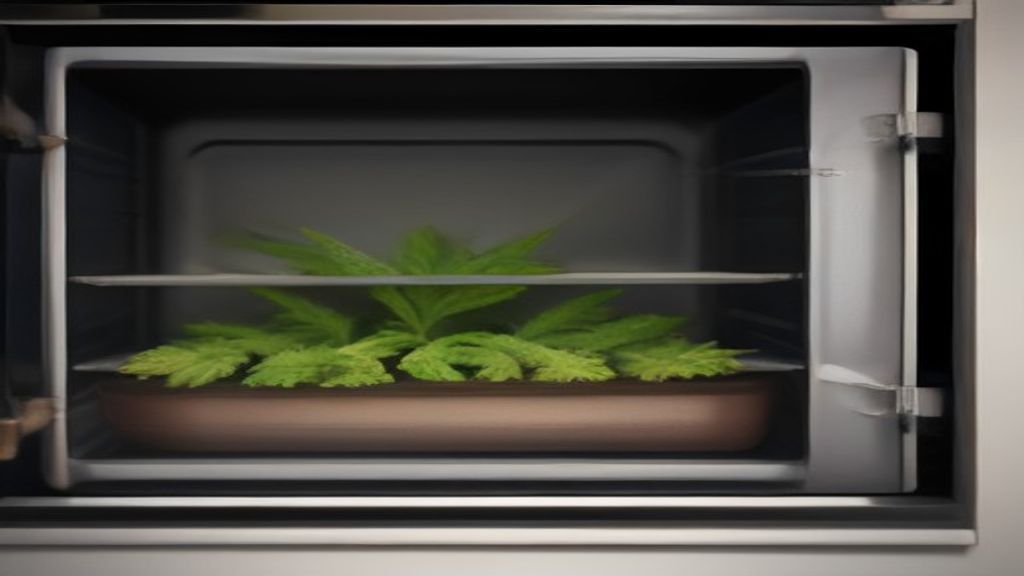
Begin by preheating your oven to its absolute lowest setting. Most modern ovens have a “warm” or “proof” setting that operates between 100°F and 150°F. If your oven does not offer temperatures below 170°F, the risk of degrading the material increases exponentially. Cover a baking sheet with parchment paper—not aluminum foil—as parchment provides a neutral surface that does not conduct heat as aggressively as metal, reducing the chance of hot spots on the material.
Executing the Thermal Cycle
- Distribute the Material: Place the florets in a single layer, ensuring none are overlapping. Airflow is as important as heat; overcrowding will lead to uneven drying.
- Monitor Temperature: Use an external oven thermometer to verify the internal temperature, as built-in dials are often inaccurate by up to 25 degrees.
- Ventilation: Keep the oven door slightly ajar. This allows moisture-laden air to escape and prevents the oven from becoming a high-humidity chamber, which would cook rather than dry the material.
- Frequent Agitation: Every 10 to 15 minutes, gently rotate the baking sheet and flip the pieces to ensure all surfaces are exposed to the convective heat.
Comparing Drying Methodologies
While speed is the primary advantage of oven drying, it is important to weigh this against the qualitative outcomes of traditional methods. The following table highlights the differences between these two approaches.
| Feature | Traditional Air Drying | Oven Drying (Rapid) |
|---|---|---|
| Timeframe | 7–14 Days | 1–3 Hours |
| Terpene Retention | Excellent | Low to Moderate |
| Potency Preservation | High | Variable (Risk of Decarb) |
| Chlorophyll Breakdown | Complete (Smooth taste) | Incomplete (Harsh taste) |
Technical Parameters and Thermal Thresholds
The specific temperatures used during the drying process determine the chemical composition of the final product. Cannabinoids begin to undergo significant changes at specific thermal markers. If the oven exceeds 220°F, the material will begin to decarboxylate, converting THCA into THC. While this is necessary for edibles, it is undesirable for material intended for long-term storage or traditional use, as it reduces the shelf-life and alters the physiological effects.
| Temperature Range | Effect on Botanical Material | Suitability for Drying |
|---|---|---|
| 100°F – 125°F | Slow moisture loss, high terpene preservation. | Optimal for Quality |
| 130°F – 150°F | Rapid desiccation, some terpene loss. | Acceptable for Speed |
| 160°F – 200°F | High risk of scorching and terpene volatilization. | Not Recommended |
| 220°F+ | Decarboxylation and vaporization of essential oils. | Avoid Entirely |
Key Takeaways
- Low and Slow: Never exceed 150°F if your goal is to preserve flavor and aroma.
- Airflow is Essential: Keeping the door cracked prevents the accumulation of steam.
- Monitoring: Constant supervision is required; material can go from dry to scorched in minutes.
- Post-Dry Rest: Allow the material to cool completely at room temperature before placing it in airtight containers.
Frequently Asked Questions
Does oven drying affect the potency of the cannabis?
If temperatures are kept below 150°F, potency remains largely intact. However, because heat accelerates the degradation of THC into CBN, prolonged exposure to higher temperatures can result in a more sedative, less potent effect compared to traditional drying.
Why does oven-dried material often taste “grassy”?
The “grassy” flavor is caused by retained chlorophyll. Traditional drying allows for an enzymatic process that breaks down chlorophyll over several days. Oven drying happens too quickly for this breakdown to occur, often resulting in a harsher smoke.
Can I use a convection oven for this process?
Yes, convection ovens are actually superior for drying because they use fans to circulate air. This ensures a more even temperature distribution and helps move moisture away from the plant material more efficiently, though you must still keep the temperature at the lowest possible setting.
About the Author