The transition from a harvested plant to a refined, connoisseur-grade product is a journey defined by patience and precision. While the drying phase removes the majority of free moisture from the plant tissues, the curing process is a sophisticated biochemical maturation that develops the flower’s full potential. For many cultivators, the primary question remains: how long to cure cannabis in jar environments to achieve the peak of aromatic complexity and physiological effect? This timeframe is not a static number but a variable window influenced by botanical density, initial moisture content, and environmental stability. Understanding the mechanics of curing allows a grower to stop the degradation of cannabinoids and facilitate the enzymatic breakdown of residual chlorophyll, which otherwise results in a harsh, “grassy” smoking experience. By mastering this final stage, you ensure that the delicate terpenes are preserved and the secondary metabolites are stabilized. This guide provides a technical overview of the temporal requirements and environmental benchmarks necessary to execute a professional-grade cure, ensuring your harvest reaches its absolute maximum quality through controlled atmospheric management.
Mastering the Timeline: How Long to Cure Cannabis in Jar for Optimal Results
Establishing the Ideal Curing Duration
Determining how long to cure cannabis in jar containers depends largely on the intended use and the specific strain’s profile. At a minimum, a cure should last at least two to four weeks. During this initial window, the moisture within the center of the buds migrates outward to the surface, equilibrating the overall hydration of the flower. While buds may appear dry on the outside after the initial hang-dry, the internal stem often retains a reservoir of moisture that must be slowly released to prevent mold and ensure an even burn.
For those seeking the highest echelon of quality, a curing period of four to eight weeks is often considered the “sweet spot.” During this extended timeframe, the complex sugars and minerals produced during the plant’s life cycle begin to break down. If the process is rushed, these compounds remain, leading to a bitter flavor and an acrid smoke. Conversely, an extended cure beyond six months is possible but requires rigorous climate control to prevent the oxidative degradation of THC into CBN, which significantly alters the psychoactive profile from uplifting to sedative.
The Impact of Time on Quality
As the timeline progresses, the sensory attributes of the flower evolve. The following comparison highlights the differences between a short-term and long-term cure.
| Curing Duration | Terpene Profile | Smoke Quality | Cannabinoid State |
|---|---|---|---|
| 2 Weeks | Sharp, volatile | Moderate; potential for “green” taste | THCA stabilizing |
| 4-8 Weeks | Complex, nuanced | Smooth, clean ash | Peak potency |
| 3+ Months | Mellow, deep notes | Extremely smooth | Increased CBN levels |
The Science of Biochemical Transformation
The curing process is not merely a secondary drying phase; it is an active metabolic period. Even though the plant has been severed from its root system, aerobic bacteria and residual enzymes continue to function within the cellular structure. These biological agents consume the chlorophyll and non-structural carbohydrates. Effective curing preserves the trichome integrity while allowing these unpleasant-tasting compounds to dissipate safely through the process of “burping” the jars.
Furthermore, the stabilization of terpenes is critical. Terpenes are highly volatile organic compounds that can evaporate if exposed to excessive heat or airflow. By sealing the flower in an airtight glass jar, you create a micro-environment where the vapor pressure of the terpenes reaches an equilibrium, effectively halting further volatilization. This is why a properly cured bud smells significantly more potent once the jar is opened compared to a bud that has been left to air-dry indefinitely.
Environmental Parameters for Success
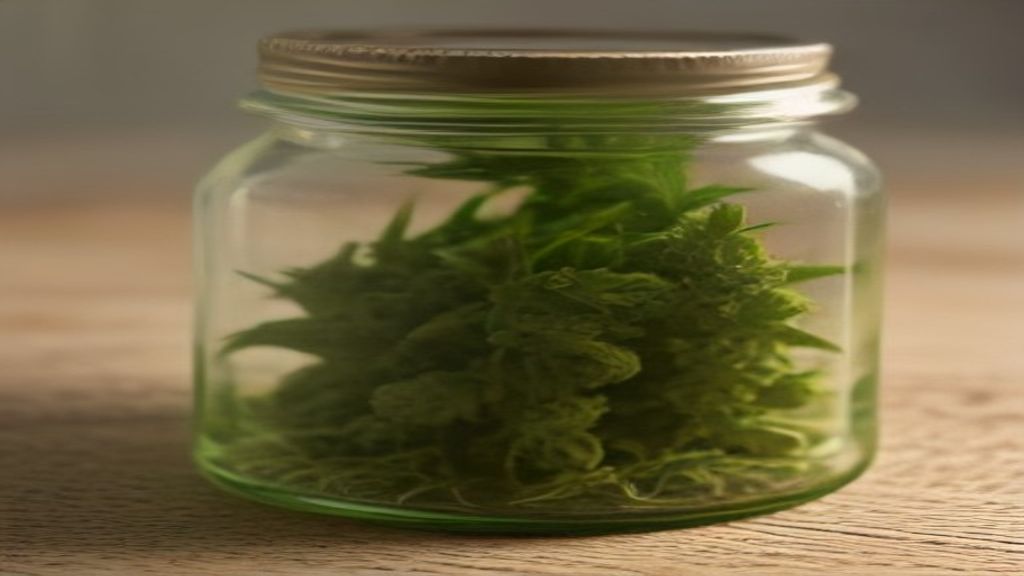
To successfully navigate the curing timeline, one must maintain strict control over the internal atmosphere of the jar. The two most critical variables are relative humidity (RH) and temperature. Ideally, jars should be stored in a cool, dark location between 60°F and 70°F. Light exposure, particularly UV rays, will catalyze the breakdown of cannabinoids, undoing the benefits of the cure.
Maintaining the Humidity Sweet Spot
Monitoring the RH inside the jar is essential for preventing microbial growth while facilitating enzymatic activity. A digital hygrometer placed inside each jar provides real-time data to guide your adjustments.
| RH Percentage | Condition | Required Action |
|---|---|---|
| Above 70% | Danger zone for mold | Remove buds from jar to dry further |
| 63% – 68% | High curing moisture | Increase burping frequency (2-3 times daily) |
| 58% – 62% | Ideal curing range | Normal burping schedule (1 time daily) |
| Below 55% | Too dry | Curing stops; add humidity packs |
Monitoring Internal Humidity and Gaseous Exchange
The physical act of “burping” involves opening the jar briefly to allow fresh oxygen to enter and metabolic byproducts, such as carbon dioxide and ethylene gas, to exit. In the first week, this should be done once or twice daily for approximately 10 minutes. As the moisture levels stabilize, the frequency can be reduced to once every few days, and eventually once a week.
Consistent monitoring is the only way to ensure the cure is progressing correctly. If you notice an aroma of ammonia when opening a jar, it is an immediate sign that the moisture content is too high and anaerobic bacteria are beginning to consume the organic matter. In this scenario, the buds must be removed and spread out in a dry area for several hours before returning to a fresh, clean container.
Key Takeaways
- Standard Duration: A minimum of 2–4 weeks is required, while 4–8 weeks yields premium results.
- Humidity Control: Aim for a stable internal RH between 58% and 62%.
- Vessel Choice: Wide-mouth glass jars are the industry standard for maintaining an airtight seal.
- Storage Conditions: Keep jars in a cool, dark environment to prevent light and heat degradation.
- Gaseous Exchange: Regularly burp jars to refresh oxygen levels and remove metabolic gases.
How Long to Cure Cannabis in Jar: Frequently Asked Questions
Can you over-cure cannabis?
Yes. While cannabis can be stored for long periods, curing it beyond six months often leads to the degradation of THC into CBN. While this is not harmful, it results in a less potent and more lethargic effect. Additionally, the terpenes will eventually begin to break down, leading to a loss of flavor.
What happens if I skip the curing process?
Skipping the cure results in a product that is harsh on the respiratory system and lacks the nuanced flavor profile of the strain. The presence of residual chlorophyll makes the smoke taste “green” or hay-like, and the moisture imbalance can cause the flower to burn unevenly or extinguish frequently.
Do I need to use humidity packs?
Humidity packs are excellent for maintaining stability once the ideal RH is reached. However, they should not be used as a substitute for proper drying. Relying on packs too early in the curing process can sometimes mask the natural aroma, making it harder to detect potential issues like mold or bacterial growth.
About the Author